Originally published on 4/9/26
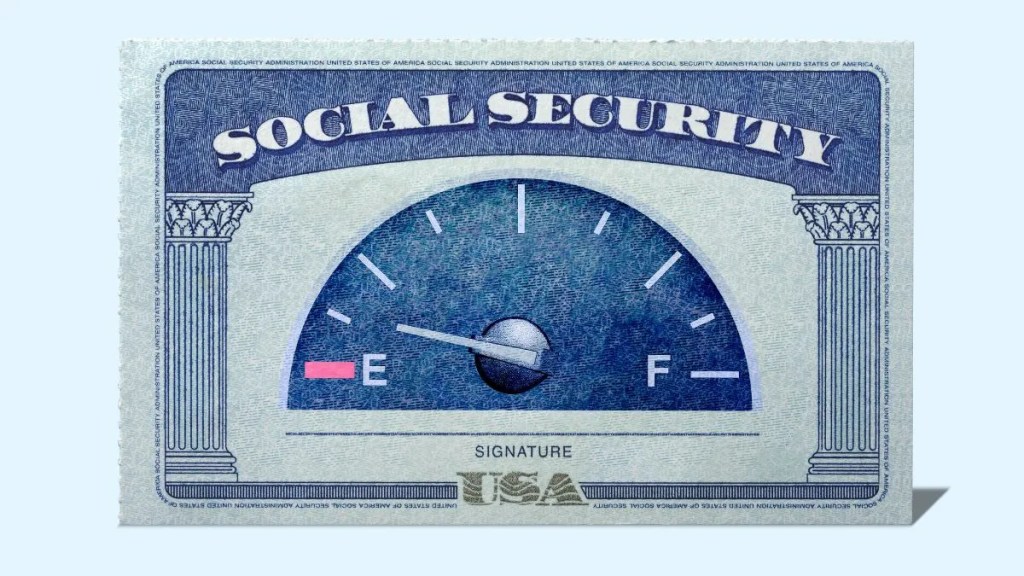
For many current and future retirees, one headline is downright scary: Social Security is running out. But what does that claim actually mean—and does it really suggest your benefits could disappear? Here’s what the numbers say about Social Security’s timeline, plus the proposals lawmakers are weighing to keep checks coming.
Is Social Security running out?
Social Security is a government-funded program that pays monthly benefits to retirees, people with disabilities and eligible survivors, including widows and widowers. It’s run by the Social Security Administration (SSA), and as of March 2026, more than 75 million Americans receive benefits from the program.
To fund those benefits, all working Americans contribute 6.2 percent of their wages into a payroll tax called the Federal Insurance Contributions Act (FICA).
Self-employed workers also pay into it under the Self-Employed Contributions Act (SECA), but their contribution is 12.4 percent. Those contributions are paid to people who currently collect Social Security each month.

In recent years, a number of reports have claimed SSA is paying more money than they are receiving, causing experts to believe the funds are going to run out by 2032. But organizations like AARP say that when the reserve created by FICA and SECA does run out, the SSA will still have enough money to fund 81 percent of American’s benefits. And while that isn’t the same as 100 percent, it’s better than zero.
“It doesn’t help that there are politicians and others out there who are saying Social Security is going bankrupt,” Suzanne Shu, a professor of marketing at Cornell University’s SC Johnson College of Business and co-author of a new paper that revealed that two thirds of Americans believe Social Security will run out, told USA Today.
Is there a way to keep Social Security from running out?
Over the past few years, lawmakers and economists have come up with ideas for extending Social Security’s lifespan. SSA commissioner Frank J. Bisignano, proposed raising the retirement age—a change that would decrease the number of people eligible for Social Security benefits.
“I think everything’s being considered,” he said on the Fox News show Mornings with Maria in September 2025.
Another option proposed by the Committee for the Responsible Federal Budget is a “Six Figure Limit” plan, which would limit Social Security benefits to $100,000 per year for couples and $50,000 per year for individuals.
“The wealthiest seniors are collecting from Social Security for the first time $100,000 in benefits,” Marc Goldwein, senior policy director at the CRFB, told CBS News. “This is a program that, when you go back to its founding, was a measure of protection against falling into poverty. The fact that an income-support program would pay six figures is a little silly.”
Speaking of caps, South Carolina Senator Lindsey Graham is proposing lawmakers put a cap on how much benefit money they receive, which would allow other Americans to receive more.

“There was a time in my life where that Social Security check really, really mattered,” Graham said, per CNBC. “Now, there’s the time in my life where I could probably get by with less, and if that’s what it takes to save Social Security, count me in.”
Finally, Louisiana Senator Bill Cassidy recently proposed borrowing $1.5 trillion from the U.S. Treasury that would be invested in a plan similar to a 401(k). The fund would be separate from Social Security’s current trust and would be held in escrow for 75 years, which would allow it to earn interest and offset any borrowing needed to fund Social Security benefits.
“In eight years, millions of Americans who rely on Social Security and Medicare will be left stranded if Washington does nothing,” Cassidy said in a statement. “If we borrow to pay for benefits, we will rack up hundreds of trillions of dollars in debt. Congress must do everything we can to address a cliff we all see coming.”
As of publication, none of these ideas have been approved.
Link to original: https://www.womansworld.com/life/money/is-social-security-running-out-experts-weigh-in
 Carissa Mosness