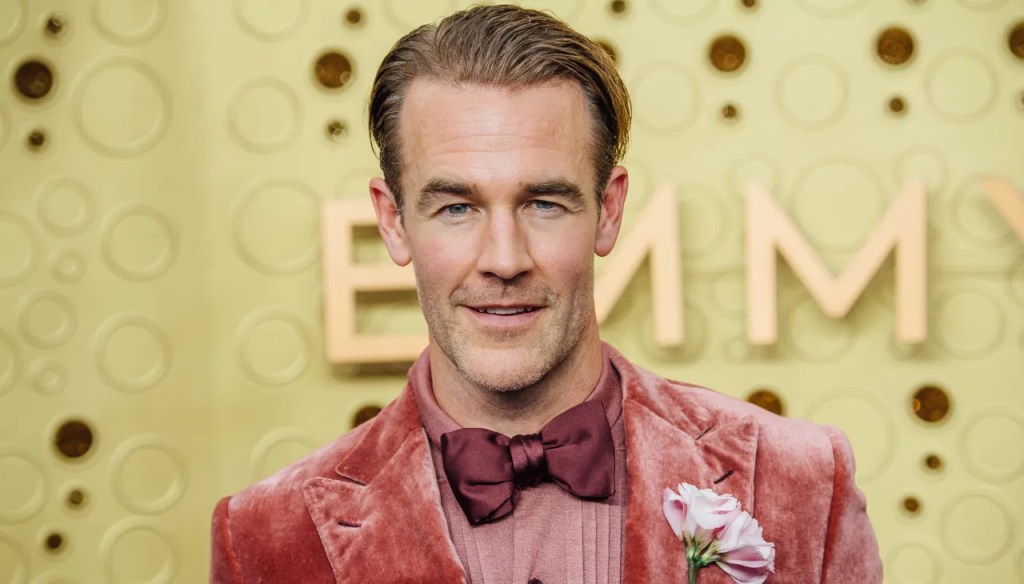
Originally published on 2/12/26
Dawson’s Creek star James Van Der Beek passed away on February 11 at age 48 from colorectal cancer. The beloved TV star and father of six had been battling the disease since August 2023 after it was discovered during a colonoscopy screening.
“Our beloved James David Van Der Beek passed peacefully this morning. He met his final days with courage, faith and grace,” James’ wife Kimberly Van Der Beek wrote in a social media caption. “There is much to share regarding his wishes, love for humanity, and the sacredness of time. Those days will come. For now, we ask for peaceful privacy as we grieve our loving husband, father, son, brother and friend.”
Here we take a look at the actor’s cancer journey, the early warning sign he dismissed and his legacy of courage.
James Van Der Beek’s colon cancer symptoms were subtle at first
Before his death, James had been outspoken about his cancer journey, telling People magazine in November 2024 that at first he thought his symptoms were just “a change in bowel habits.”
“I thought, I probably need to change my diet a little bit. Maybe I need to stop drinking coffee. Maybe I need to not put cream in the coffee. And then I finally took that out of the diet, and it didn’t improve, and I thought, all right, I better go get this checked out,” he went on to share. “I felt really, really good as I was coming out of the anesthesia that I had finally done it and looked into it. And as I was coming out of the haze, the gastroenterologist said—in his most pleasant bedside manner—it is cancer.”
Van Der Beek had ups and downs during cancer treatment
During an appearance on the Today show in December 2025, in what would be his last public interview, James explained that before his diagnosis, “I was so healthy, was in amazing cardiovascular shape. I was doing the cold plunges, and the saunas and the intermittent fasting and all of it.”
“I went into shock [after I found out I had cancer],” he continued. “I really don’t think I knew what to do. Neither did my wife. And we drove home in silence. And part of me wanted to panic. Part of me wanted to just freak out. But then another part of my brain was like, ‘You don’t know enough yet.’ If anybody takes anything away from this interview, it would be to get tested, talk to your doctor.”
In the same interview, discussing his cancer treatment, James revealed, “I feel much, much better than I did a couple months ago. It’s been a longer journey than I ever thought it would be. It’s required more of me—more patience, more discipline, more strength than I knew I had. I knew I was strong—I didn’t know I was this strong. But I feel good.”
[ami-related id=”586193″ pwaid=”” url=”https://www.womansworld.com/wellness/cancer/cathy-o-brien-shares-her-breast-cancer-journey-and-self-care-tips-exclusive” title=”” hiddentitle=”She Fought Cancer While Running a Company—Now This Survivor Helps Women Care for Themselves First (EXCLUSIVE)” target=”_blank” thumb=”true” imgsrc=”” imgid=”” format=”standard” flag=”” channel=”88″ showpromotitle=”true” source_type=”AI” source_by=”145″]
Understanding your colorectal cancer risk
Colorectal cancer begins in the longest part of the large intestine, called the colon. According to the American Cancer Society,108,860 Americans are currently fighting the disease and 53,450 of those individuals are women.
“We know colorectal cancer has been increasing in young people, and it is not exactly clear why,” explains Peter Stanich, MD, gastroenterologist with The Ohio State University Comprehensive Cancer Center—Arthur G. James Cancer Hospital and Richard J. Solove Research Institute and Wexner Medical Center, who was not involved in Van der Beek’s care.
“Part of this is likely due to increasing obesity and changes in diets over time, but many people are still investigating the cause of this,” he continues. “It is still much less common than it is in older adults, but it is a worrisome trend. This is the reason the screening age was reduced to age 45 from 50 in 2018.”
The subtle colon cancer symptom people overlook
Like James, many of us experience changes in our bowel habits and assume it’s because we may need to clean up our diets or ate something that didn’t agree with us. But those subtle—and not-so-subtle—shifts can sometimes be an important early symptom of colon cancer.
“Changes in your bowel movements or abdominal pain have a wide variety of causes, but also should be discussed with your doctor,” says Dr. Stanich, who adds that he or she will likely recommend a colonoscopy to check for colon cancer and other non-cancerous health issues. “We want to make sure that these signs are taken seriously no matter a person’s age.” That’s especially true if you’re experiencing blood in your stool or iron deficiency, he adds.
Dr.Stanich also notes that “Many colorectal cancers do not cause symptoms, which is why it is so important to have the recommended screening test at the recommended age [45].”
[ami-related id=”603594″ pwaid=”” url=”https://www.womansworld.com/wellness/cancer/colon-cancer-screening-new-guidelines-risks” title=”” hiddentitle=”‘A Call to Action’: Why New Research Is Shaking Up Colon Cancer Screening Guidelines for 2026″ target=”_blank” thumb=”true” imgsrc=”” imgid=”” format=”standard” flag=”” channel=”88″ showpromotitle=”true” source_type=”Manual” source_by=”145″]
When you might need a colonoscopy sooner than 45
“For average risk people, meaning no personal history of colon cancer or polyps and no family history of colorectal cancer in close relatives, colon cancer screening should start at age 45. Colonoscopy is the most common [screening tool], but other options, such as stool testing, are available and beneficial,” says Dr. Stanich. “For those with a family history of colorectal cancer or advanced colon polyps in parents, siblings or children, we recommend starting [screenings] at age 40 or possibly younger based on the age of the relative. If you have a family history of cancer, it is important to talk to your healthcare team so you can get optimal, personalized recommendations. For patients at increased risk, a colonoscopy is recommended [over stool tests]. There are also inherited causes of colorectal cancer, most commonly a condition called Lynch syndrome that is more common than people think at 1 in 280, and for which genetic testing is readily available.”
As for what you can do to lower your risk aside from keeping up with routine screenings, following a healthy diet is key.
“A fish- and vegetable-based diet with limited red meats or processed meats is the healthiest. However, even if you eat very healthy and are very fit it is important to have colorectal cancer screening done, as these [cancers] can occur even with the healthiest lifestyle,” says Dr.Stanich.
Link to original: https://www.womansworld.com/wellness/cancer/james-van-der-beek-early-cancer-symptom

 Carissa Mosness
Leave a comment