Originally published on 12/19/25
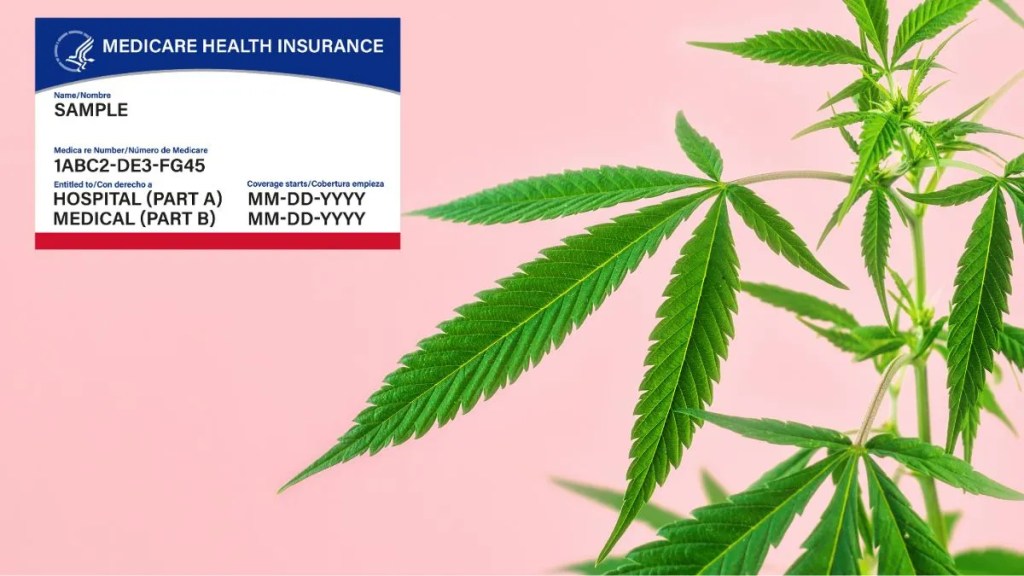
Medicare and marijuana are not two words one normally hears in the same sentence. But that’s changing now that President Donald Trump has signed an executive order allowing the insurance program to cover cannabis products for seniors. Below, we share what exactly is in the order, and what this new coverage means for you.
What to know about the new medical marijuana Medicare rules
On Thursday, December 18, President Trump announced that he would allow seniors on Medicare to receive medical marijuana (cannabis) if it’s necessary. He will do so by reclassifying cannabis as a Schedule 3 drug, which is in the same category as Tylenol with codeine, rather than as a Schedule I drug, the category for drugs like heroin and LSD. He will also allow Medicare to fully cover CBD (a chemical derived from the cannabis sativa, or hemp plant) products for patients if it’s medically needed.
“This reclassification order will make it far easier to conduct marijuana-related medical research, allowing us to study benefits, potential dangers and future treatments,” President Trump said in the Oval Office. “It’s going to have a tremendously positive impact.”
During the announcement, Centers for Medicare and Medicaid Services (CMS) Administrator Mehmet Oz, MD, said he would help with this launch by initiating a pilot program that will test the benefits of having CBD covered by Medicare. It will be the first time in history that Medicare has covered any cannabis-based treatment—a decision that many hope may pave the way for more natural remedy coverage in the future.
“The innovation center models are going to allow millions of Americans on Medicare to become eligible to receive CBD as early as April of next year and at no charge, if their doctors recommend them,” Dr. Oz said.

As of publication, there is no news on how people can apply for the pilot. There is also no official word on what Medicare coverage part marijuana will fall under, meaning that there is no news on how much the coverage could cost patients.
Experts are concerned over how doctors are going to respond to this news. Sue Sisley, who leads the Scottsdale Research Institute’s studies on marijuana and psychedelics, told CNN “Once it [marijuana] becomes Schedule 3, it becomes something prescribable—but how do doctors know what to do with this?”
“Doctors are going to have a real struggle to figure out how to help their patients,” she continued. “But they’re going to have a lot of patients approaching them now about it because of this new status.”
And she’s not alone in feeling that way. Cat Packer, a lawyer with the Drug Policy Alliance who led Los Angeles’ cannabis regulation program, echoed those concerns, telling CNN, “The assumption is that marijuana is going to be treated like every other Schedule 3 drug, but there are lots of reasons why we should suspect that it won’t be.”
“The reality is that we don’t know how cannabis is going to be enforced under this new regime,” Packer concluded.
Medical benefits of marijuana
According to the National Institutes of Health (NIH), there are several benefits of medical marijuana, especially for people with chemotherapy-induced nausea and vomiting, chronic pain and multiple sclerosis (MS)-related spasticity. Many people with these conditions find the drug helps decrease pain, lower stress and ease other symptoms.

Others say CBD helps them ease anxiety, and improve sleep. One 78-year-old woman told Woman’s World earlier this year that a CBD balm helped her beat her arthritis pain naturally.
Link to original: https://www.womansworld.com/healthcare/does-medicare-cover-medical-marijuana-what-seniors-need-to-know-about-new-rules


 Carissa Mosness
Leave a comment