Originally published on 11/18/25
It’s been less than a week since the United States Mint stopped making the penny, and restaurants and retailers have begun posting signs informing customers how they will be operating going forward. Some are rounding up and/or down, and others are requiring customers to have exact change should they want to pay in cash. Below, we break down which stores and restaurants are doing what and share how you can prepare yourself and your wallet before you step inside. Scroll on for more.
Why did they get rid of the penny?
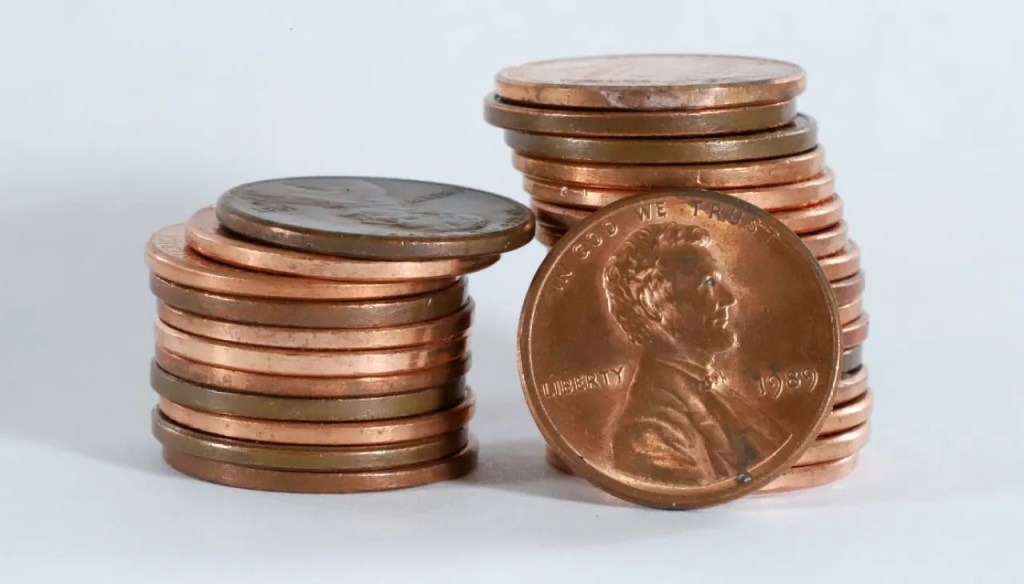
The U.S Mint officially stopped minting the penny—which is worth one cent—on Wednesday, November 12. They did so because it reportedly costs an average four cents to make each coin—more than the it’s worth.
“God bless America, and we’re going to save the taxpayers $56 million,” U.S. Treasurer Brandon Beach told the AP before the last penny was made.

The decision to stop the production of the penny was made by President Donald Trump back in February, saying in a Truth Social post, “For far too long the United States has minted pennies which literally cost us more than 2 cents. This is so wasteful! I have instructed my Secretary of the US Treasury to stop producing new pennies.”
“Although today we say goodbye to our copper 1-cent coin, let me be crystal clear: The penny remains legal tender,” Beach said in February. “We have over 300 billion pennies that remain in circulation, and we encourage you to use them.”
Now, retailers are bracing for the end of the penny by changing the cost of their products for people who pay in cash.
“Some businesses are asking cash-paying customers to voluntarily round up for donations to avoid needing pennies to make change and to stay compliant with state and local laws, while other places are rounding down for everyone (not just cash payers),” Brandon Sheridan, associate professor of economics at Elon University said in a statement, per USA Today.
A look at what businesses are doing now that the penny is retired
Fast-food and quick-serve restaurants are getting creative in their approach to the elimination of the penny.
McDonald’s, for example, is rounding their change to the nearest dollar when pennies are unavailable. So if your order ends in one or two cents, it will go down to zero. If it ends in three or four cents it will go up to five cents. If it ends in six or seven cents it will go down to five cents and if it ends in eight or nine cents it will round up to 10 cents. If your order ends in five or zero cents, your amount owed will not change.
“Following the discontinuation of pennies nationwide, some McDonald’s locations may not be able to provide exact change,” McDonald’s told CBS in a statement. “We have a team actively working on long-term solutions to keep things simple and fair for customers. This is an issue affecting all retailers across the country, and we will continue to work with the federal government to obtain guidance on this matter going forward.”
And they aren’t alone. Several other businesses including Wendy’s, Auntie Anne’s, Cinnabon, Jamba and Carvel have all announced that they plan to round their customers’ transition amounts to a dividend of five to help compact the potential loss in pennies.
“We have given guidance to our restaurants to round cash transactions down to the nearest nickel if they are experiencing penny shortages,” Wendy’s told CBS in a statement.
Shopping without pennies: How to be prepared
If you’re planning on paying in cash going forward, experts recommend bringing spare change or being prepared to pay a couple of cents more sometimes. They also recommend looking into other payment methods, such as debit and credit cards.
“In a situation where a business lacks adequate change, it’s better that you pay through digital means such as a debit or credit card or a mobile wallet,” Clay Cary, senior trends analyst and financial expert at CouponFollow said. “This will eliminate problems related to coins entirely.”

That can be difficult, though, since some stores require a minimum amount for credit card transactions. And while you could buy more to get to the minimum, you may not want to spend the money–or order more food. Another option: “Ask the cashier to allow you to make the small purchase with your card because they don’t have the change to help you with the transaction,” advises Erica Sandberg, a consumer finance expert at BadCredit.org. “Setting a minimum card spend is a policy, not a law. They can waive it.”
Link to orignal: https://www.womansworld.com/life/money/the-penny-is-retired-how-restaurants-are-handling-payments


 Carissa Mosness
Leave a comment