Originally published on 11/6/25
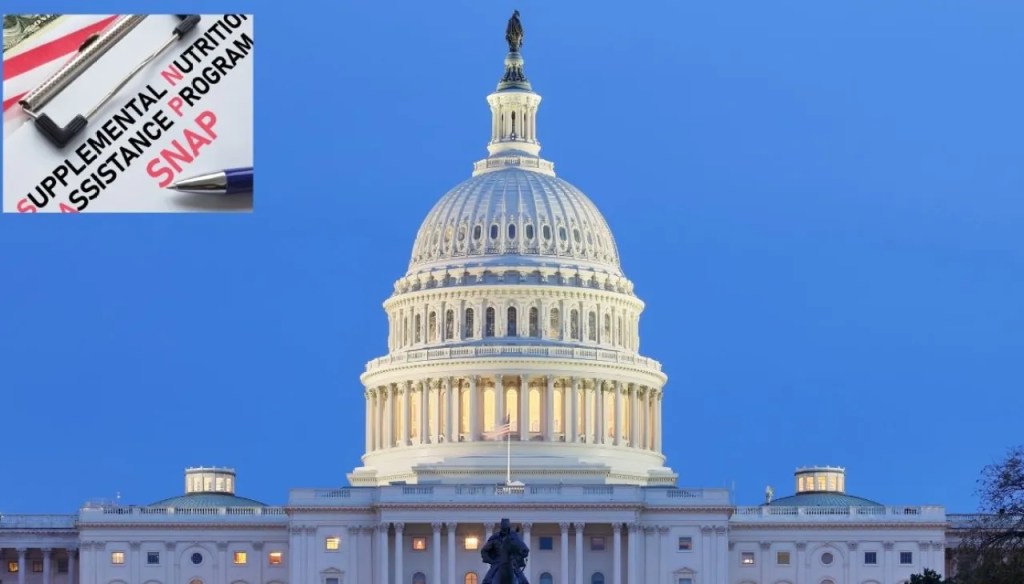
Supplemental Nutrition Assistance Program (SNAP) users just received another major update. A federal judge just responded to President Donald Trump’s court filing that said he would only be giving SNAP recipients half of their monthly benefits in November. We share the latest updates, including when exactly people on SNAP can expect to see their benefits this month, below.
What to know about SNAP in November
SNAP—also known as food stamps—is a government-funded program that helps low-income Americans purchase groceries. President Donald Trump and his administration changed the program in September of this year, resulting in 2.4 million people having to reevaluate their benefits. At the beginning of the federal government shutdown, it seemed there would be no changes made to the program, but that all changed once it was revealed that come November 1 SNAP was expected to run out of money—a fact that would have resulted in a pause of benefits for millions of beneficiaries.
Following that, several states sued President Donald Trump and his administration, claiming, “Shutting off SNAP benefits will cause deterioration of public health and well-being.”
Days after that, on Friday, October 31, Rhode Island federal judge John McConnell ruled that the U.S. Department of Agriculture (USDA) must fund SNAP during the shutdown by using its contingency fund and if that money runs out, the ruling stated that the USDA must find other funding methods, ensuring that millions of Americans receive their benefits in November.
“There is no doubt that the $6 billion in contingency funds are appropriated funds that are without a doubt necessary to carry out the program’s operation,” McConnell said in his oral ruling. “The shutdown of the government through funding doesn’t do away with SNAP. It just does away with the funding of it. There could be no greater necessity than the prohibition across the board of funds for the program’s operations.”

“There is no doubt, and it is beyond argument, that irreparable harm will begin to occur if it hasn’t already occurred in the terror it has caused some people about the availability of funding for food for their family,” he continued. “It’s clear that when compared to the millions of people that will go without funds for food versus the agency’s desire not to use contingency funds in case there’s a hurricane need, the balances of those equities clearly goes on the side of ensuring that people are fed.”
President Trump and his administration responded to this ruling on Monday, November 3, saying in a court filing that they intend “to deplete SNAP contingency funds completely and provide reduced SNAP benefits for November 2025.”
“The above will leave a total of $4.65 billion in the contingency fund for November SNAP benefits that will all be obligated to cover 50 percent of eligible households’ current allotments,” the document continued. “This means that no funds will remain for new SNAP applicants certified in November, disaster assistance or as a cushion against the potential catastrophic consequences of shutting down SNAP entirely.”
The news was met with heavy pushback and concern, particularly because, following the initial announcement, there was no information on when the benefits would reach the 42 million Americans who rely on SNAP. White House Press Secretary Karoline Leavitt responded on Tuesday, November 4, telling reporters, “The administration is fully complying with the court order. I just spoke to the president about it.”

She also noted that “it’s going to take some time to receive this money,” which raised a lot of alarm bells for lawmakers. This included Judge McConnell, who announced on Thursday, November 6 that President Trump and his team needed to pay SNAP users the entirety of their benefits by Friday, November 7.
“The defendants failed to consider the practical consequences associated with this decision to only partially fund SNAP,” McConnell said. “They knew that there would be a long delay in paying partial Snap payments and failed to consider the harm individuals who rely on those benefits would suffer.”
“The evidence shows that people will go hungry, food pantries will be overburdened and needless suffering will occur,” he continued. “Last weekend, SNAP benefits lapsed for the first time in our nation’s history. This is a problem that could have and should have been avoided.”
Then, on Friday, November 7 President Trump and his administration responded to that order by asking for an emergency pause on judge McConnell’s order. In the filing, President Trump argued that there simply isn’t enough money to fully fund SNAP in November, and that sending out partial payments would be a much more feasible option.
“This is a crisis, to be sure, but it is a crisis occasioned by congressional failure, and that can only be solved by congressional action,” the administration wrote in the filing. “This Court should allow USDA to continue with the partial payment and not compel the agency to transfer billions of dollars from another safety net program with no certainty of their replenishment.”
Hours later, a federal appeals court denied the request for an emergency pause, meaning that as of publication President Trump and his administration are required to fully fund SNAP in November. The president hasn’t responded to this ruling.
When SNAP users can expect to receive their November 2025 benefits
As mentioned above, Judge McConnell has ordered President Trump to pay SNAP users their benefits on Friday, November 7. However, it’s unclear when exactly on Friday that will happen, even though President Trump just told states that he plans to issue the benefits as soon as possible. This news came after the court filing he issued Friday morning, which was later denied by a federal appeals court.
“Without SNAP funding for the month of November, 16 million children are immediately at risk of going hungry,” McConnell said on Thursday, November 6. “Children are immediately at risk of going hungry. This should never happen in America.”

“People have gone without for too long,” he continued. “Not making payments to them for even another day is simply unacceptable.”
It’s important to note that when the government does reopen, the emergency funding will stop. Once it does though, it’s unclear if there will be any changes made to SNAP, since it is one of the programs expected to be talked about in the bill Congress is expected to vote on in the upcoming weeks. It’s also unclear, if the shutdown continues into the month of December how SNAP will be funded then.
Helping those on SNAP to get groceries
Even with the SNAP funding news, many Americans still might struggle to feed their families—especially since they were left without benefits for so long. If you’re in a position to help them, experts recommend donating to a local food bank.
Items to consider giving include peanut butter, canned soup and stew, canned fruit and vegetables, canned fish and canned beans, as well as pasta and rice. According to Feeding America, these are the most common items food banks need. Many will also accept personal care items like diapers, laundry detergent and period products. What not to give? Foods that need to be refrigerated, leftover foods and baked goods.

For more information on what to give and what not to give, and to find a food bank near you, visit FeedingAmerica.org
to give, and to find a food bank near you, visit FeedingAmerica.org
Link to original: https://www.womansworld.com/life/money/snap-benefits-could-stop-in-november-2025-what-to-know


 Carissa Mosness
Leave a comment