Originally published on 7/18/25
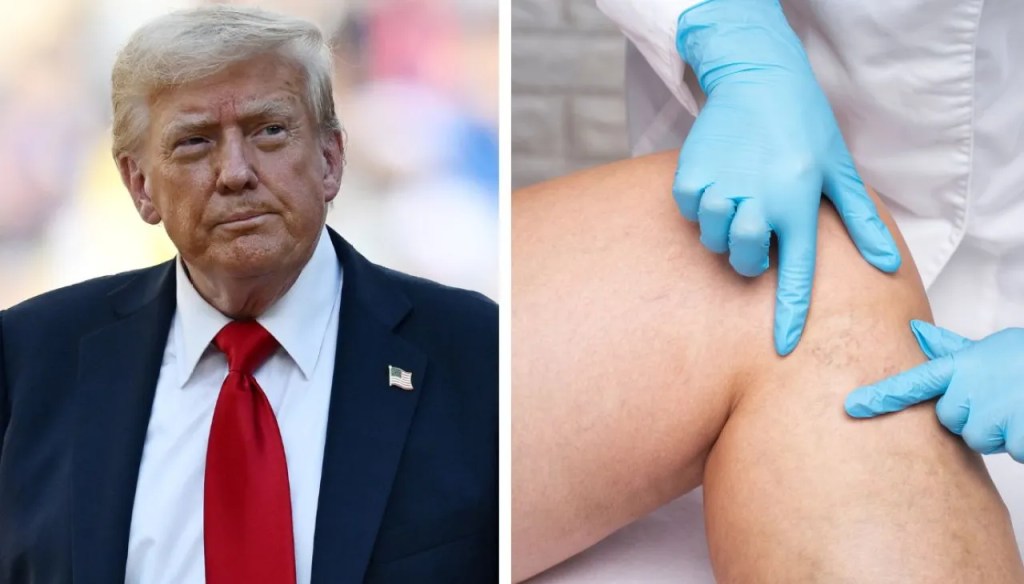
On Thursday, July 17, White House Press Secretary Karoline Leavitt, 27, announced that President Donald Trump, 79, had been diagnosed with a vein disease called chronic venous insufficiency. This news came after people online began to notice an unnatural amount of swelling in his legs. We investigate exactly what that diagnosis means and what potential treatment options are available below.
What is chronic venous insufficiency?
Chronic venous insufficiency (CVI) is a condition that makes it difficult for your veins to send blood to your heart. It is most commonly found in people’s legs and can be caused by age, obesity, smoking, a blood clot, lack of exercise, an unhealthy lifestyle and/or a family history, according to Johns Hopkins.
It is not believed to be life-threatening, but Dr. Lee Kirksey, a vascular surgeon at the Cleveland Clinic, told NBC News it can “raise a yellow flag for us to look at underlying issues, whether it’s body weight or whether it’s a sedentary lifestyle.”

CVI is believed to affect over 25 million adults in the United States and after its initial diagnosis, can cause the tiniest blood vessels (capillaries) to burst open, creating open sores on the skin’s surface called venous stasis ulcers, as well as tissue inflammation and damage—all of which are treatable with the help of a medical professional.
“The veins in our legs have one job. They work against gravity to push used blood out of the legs through muscle contractions. When these veins don’t work, typically due to damaged valves, it can cause blood to pool in the legs and lead to symptoms like swelling and ulcers,” Dr. Sean Stewart, regional medical director at the Center for Vein Restoration, said, per USA Today. “For most people, this is not life-threatening. For most people, it’s genetic and it’s not a reflection of overall body health.”
What are the symptoms of chronic venous insufficiency?
For President Trump, his CVI diagnosis came after people noticed the visible swelling in his legs. For others, CVI can be diagnosed if you have trouble walking, leg or muscle spasms, tight legs, itchy calves and brown-colored skin, often in the ankle area.
Following the recognition of these symptoms, “Your provider will take your medical history and give you an exam. You may also have an imaging test called a Duplex ultrasound. This looks at blood flow and the structure of your leg veins. It checks the speed and direction of blood flow in the blood vessel,” says the Johns Hopkins website.
Treatment options for chronic venous insufficiency

According to the Cleveland Clinic, several treatment plans are available for those diagnosed with CVI. The most common ones include basic lifestyle changes, such as leg elevation, exercise, weight management and compression therapy. However, if these measures are not effective, your doctor may recommend surgeries such as ligation and stripping, microincision/ambulatory phlebectomy, Subfascial Endoscopic Perforator Surgery (SEPS) or a vein bypass.
“The best treatment for you depends on how far your condition has progressed and other medical conditions you have,” says the Cleveland Clinic. “Your provider will tailor treatment to your individual needs.”
They also reported that after treatment is complete, “Many people with CVI struggle to wear compression stockings over the long term. But compression therapy is very important to help your veins work better and ease your symptoms.”
Link to original: https://www.womansworld.com/wellness/chronic-venous-insufficiency-symptoms-and-treatments-explained


 Carissa Mosness
Leave a comment